For Reviewers — Not Shown to Learners
DIRCO Protocol Training Prototype
This is a working preview of Module 1. We'd like your input on a few things before we proceed to full production.
What you're looking at
We've taken the existing 4-hour protocol training recording and transformed it into a short-form video module (~4 minutes) with interactive comprehension exercises. This is one module of eight planned. The content is drawn directly from Ms Joubert's training — restructured, not rewritten.
What we need from you
1. Visual style direction
You'll see four visual styles for the same video content. You don't have to pick one — these are starting points to help you articulate the look and feel you'd like. Let us know what resonates, what doesn't, and we'll refine from there.
2. Corporate identity
Please send us DIRCO's CI guidelines (logos, colours, fonts) so we can apply your branding to whichever style is chosen. CI can be applied to any of the four styles.
3. Representation sensitivity
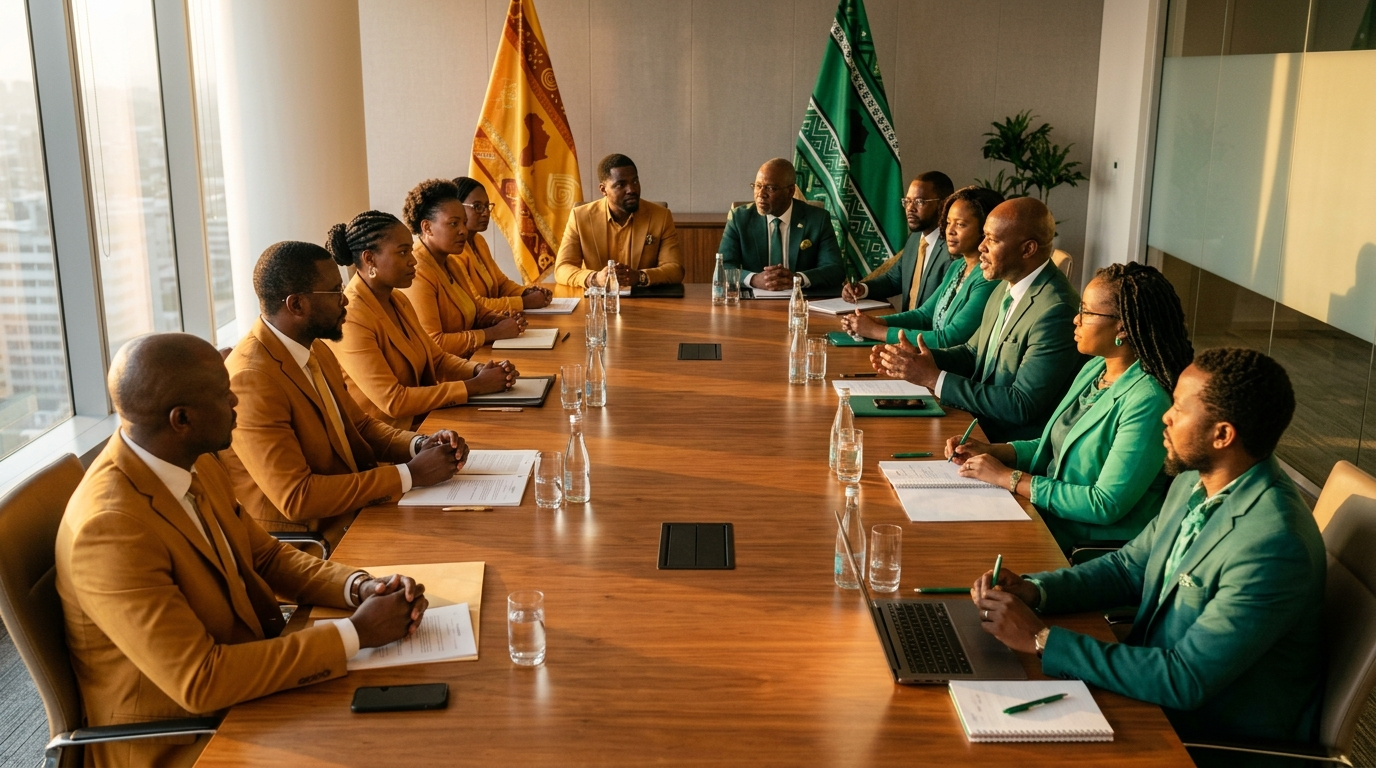
We want to get this right. Please flag anything in the visuals that feels wrong regarding cultural representation, dress, or context. Your guidance here will shape all subsequent modules.
Why we recommend Paper Art
The paper art style has practical advantages for DIRCO's context:
• Representation becomes neutral. Paper cutout figures are understood as symbols, not portraits. Nobody debates whether a paper figure is wearing the right outfit or has the right skin tone — the abstraction signals "this is a concept" not "this is a person."
• Cultural accuracy pressure drops. The training covers greetings, dress codes, and customs across cultures. Photographic images invite scrutiny about authenticity. Paper art signals teaching, not documentation.
• Labels and diagrams integrate naturally. Arrows, numbers, and text labels look like they belong in a paper world. In photographic styles, overlays always look bolted on.
• The content does the work. With less visual distraction, learners focus on the protocol principles themselves — which is the point.
strideshift.ai for Cisco South Africa & DIRCO
Interactive Module 1
The Five Rules
Five rules govern every formal interaction on earth — from state dinners to bilateral summits. Watch, learn, then prove you understand.
What you'll learn
Rule 1: The environment dictates the protocol
Rule 2: Identify the host
Rule 3: The right-hand side rule
Rule 4: Seniority determines order
Rule 5: Reciprocity — honour your guest's values
A strideshift.ai learning prototype for DIRCO
Step 1 — Watch
The Five Rules of State Protocol
Choose a visual style, then watch the module.
Exercise 1 of 5
Rule 1
South Africa and Mozambique are holding a bilateral meeting in Pretoria. Who decides the protocol rules for this meeting?
Exercise 2 of 5
Rule 2
At a formal bilateral meeting, the host always takes the centre position. Why?
Exercise 3 of 5
Rule 3
The host is seated at the head of the table. Where should the most important guest be placed?

Exercise 4 of 5
Rule 4
The most important guest has been seated. Where does the second most senior guest go?
Exercise 5 of 5
Putting It Together
South Africa hosted a bilateral meeting in Pretoria. Now the same leaders meet again in Maputo, Mozambique. What happens to the protocol arrangements?

Module Complete
Your Results
out of 5 correct on first attempt
The Five Rules
"Environment. Host. Right-hand side. Seniority. Reciprocity. Every state dinner, every summit, every bilateral meeting on earth follows this framework. The question isn't whether these rules apply. It's whether you'll notice when they're broken."
This is a preview of DIRCO's interactive protocol training. The full programme covers seating, dress code, dining etiquette, forms of address, greetings, and VIP movement — with video modules, interactive exercises, and per-learner completion tracking.
Built by strideshift.ai for Cisco South Africa & DIRCO